Commercial internet sites rarely get to select excellent ground. Urban infill tasks wedge right into narrow parcels against residential property collections as well as electrical passages. Suburban retail pads cut into sloping terrain to acquire presence coming from the freeway. Healthcare facility expansions climb spine pipes to always keep facilities on one school. In each instance, the concept crew receives a slope that needs to have to remain, also as digging, new bunches, and also water cycles try to move it. Helical tieback anchors, used considerately, give proprietors a reliable way to secure those pitches in location without significant interruption to on-going operations.
I have installed and also created tieback units in dirts that ranged from moist residues along river corridors to thick antarctic tills that believe that concrete. The procedure has actually grown into a foreseeable resource for commercial foundation stabilization. What adheres to is not a guide meant for the classroom, however instead a field-tested guide: when helical tiebacks make sense, what they ask of your site, exactly how to mix them with helical piles and also micropiles, as well as exactly how to keep risk in check.
What a helical tieback carries out that a gravitation wall cannot
A gravity wall surface stands up to action along with its personal weight and rubbing at the foundation. That operates if you have parallel area for a large ground and also stubborn soil underneath. A lot of industrial developments carry out certainly not. A helical tieback anchor transactions sidewise pressures coming from the wall structure or incline encounter back into steady ground strata, occasionally 20 to 60 feet responsible for the breakdown plane. The support strings in to the ground with very little spoil, then carries load through the coil bearing plates as well as the steel stem in tension.
The variation in impact is actually remarkable. I have actually supported a 20-foot-tall slice along with a row of soldier piles as well as tiebacks while staying entirely inside a 6-foot-wide job zone, free from visitor traffic and powers. Carrying out the same task as a gravity wall structure would have eaten a swath of the website, pushed energy movings, as well as chewed full weeks off the schedule.
Where helical tiebacks sparkle on commercial sites
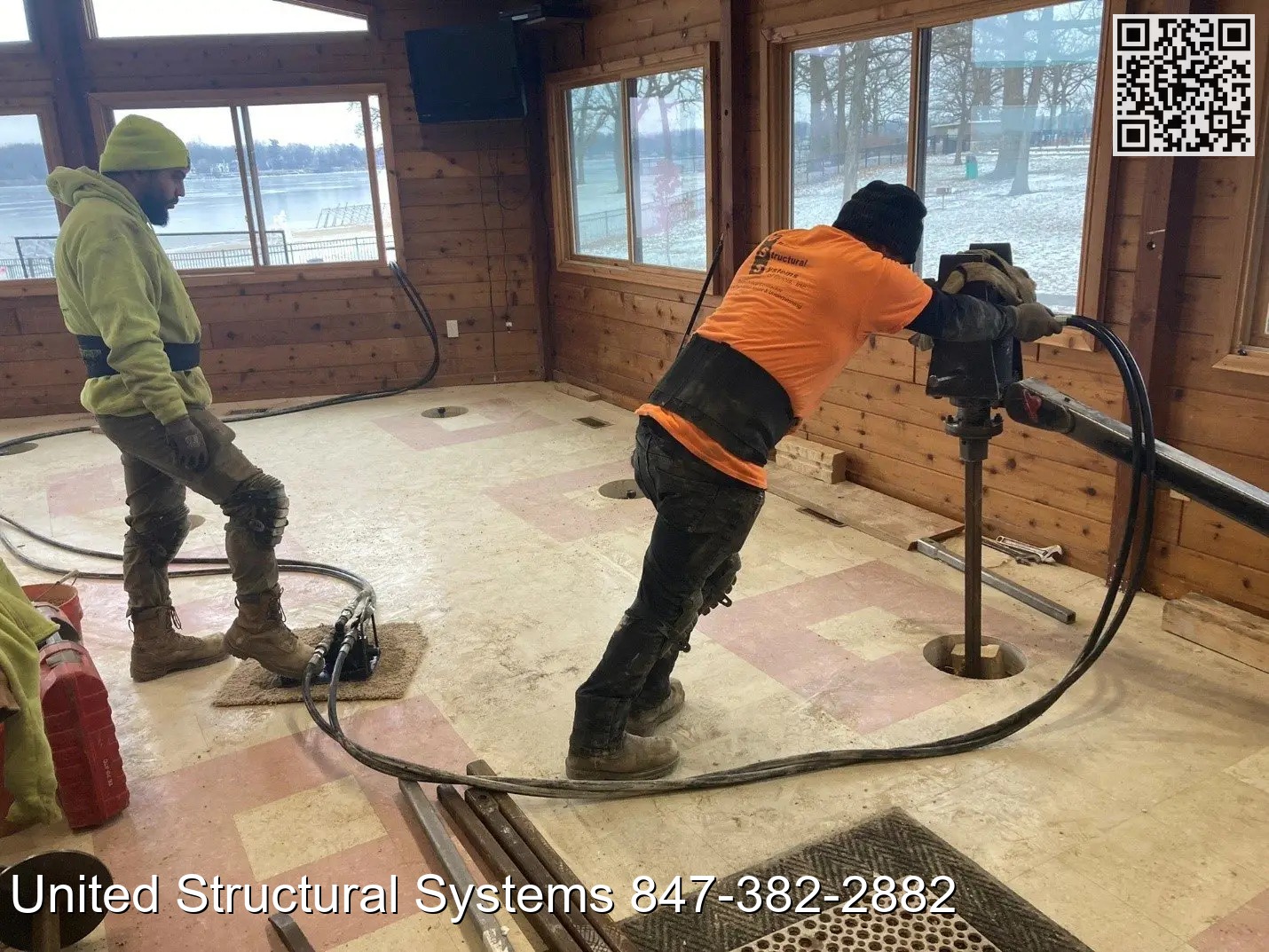
Helical tiebacks are silent, fast, and also modular. They put in along with conventional gas torque motors on bulldozers or even skid-steers, so you may function within fenced in retail great deals or hospital courtyards without exclusive cranes. The body is properly matched to:
- Temporary excavation support for below-grade auto parking or even power safes beside building pipes, where right-of-entry is actually minimal and also tiebacks should be bored under surrounding parcels without disturbing them. Permanent pitch stabilization behind business structures or at the foot of filling anchors where additional charge loads keep growing. Retrofits on aging retaining walls, where the structures is actually audio however moving or reversing elements of security have worn down along with changes in water drainage or included backfill.
An anchor design can be carefully adapted to variable dirt levels. If a boring presents 8 feets of fill, 12 feet of sandy residue, and then a thick sand level, the workers can easily spin down quickly with the top levels and also build weight merely where size is dependable. That level of medical control is harder with pierced tiebacks, which can overbreak or call for housing in the upper soils.
The auto mechanics that matter: helices, torque, and connect length
A helical tieback anchor is actually much more than a steel screw. The design counts on expected partnerships in between setup twist and best capacity, validated through payload examinations. For commercial helical tieback anchor installation, I ask the workers chief to log torque every foot. A steady torque profile, rising as helices penetrate denser dirts, shows good engagement. Quick torque decreases suggest gaps, particles, or lensing sands that need to have attention or even lengthening.
Helix configurations vary. A typical arrangement for slope stablizing uses two to four coils, 8 to 14 inches in diameter, spaced along the lead segment to lessen interaction. The target is to put the helices past the possible failing area, with a minimum of a handful of coil dimensions of undisturbed ground above and also beneath the array. In consistent sands and residues, that commonly means support lengths of 25 to forty five feet. In layered tills or even weather-beaten stone, you may need to have 60 feets or additional to get past joints that could slip.
Bond duration is actually a key phrase our company use even more along with grouted anchors, yet the concept still uses. The coils develop tons in the bearing zones, and the shaft holds tension back to the wall surface. Round-corner square stems work properly in heavy soils where tension controls, while much larger pipeline poles take care of bending over and twisting during installation and long-term sidewise results. On projects along with high corrosion possibility, our team point out hot-dip galvanizing or propitiatory thickness, occasionally both, originated from a 75- to 100-year layout life calculation.
Slope geometry and the failing surface, in evident terms
Every incline has a failure area hidden within it. For an about homogeneous ground, the shape is commonly a circular arc that begins over the foot and arcs up by means of the pitch. When our company maintain with tiebacks, our company assume that surface area cautiously, after that drive the anchor with it. The anchor incline usually ranges from 10 to 25 levels listed below straight. Shallower angles make best use of the bar branch as well as reduce upright uplift components. Steeper slants help thread by means of challenges or even hit deeper, stronger layers.
On a traditional 2H:1 V slice responsible for a retail pad, a 15-degree incline operates properly. Our company put in rows at vertical space of 4 to 6 feet, beginning a few feet above the slice foundation. Parallel spacing commonly properties in between 6 and also 10 feet, governed by fascia tightness and also international reliability inspections. You can easily secure the framework near sections or where surcharge loads focus, such as under a travel aisle or even garbage disposal slab.
Choosing in between helical tiebacks, micropiles, and resistance piles
Commercial groundwork repair is not a one-tool exchange. For incline stablizing alone, helical tiebacks often hammer alternatives for velocity and also expense in soils devoid of cobbles. Yet commercial helical pile installation, commercial resistance pile installation, as well as commercial micro pile installation all have a place in the very same project.
Micropiles, or micropiles if you prefer the shorthand, come into play when the internet site holds massive upright lots together with side demands. I have maintained a slice behind a clinical office along with helical tiebacks, at that point assisted the near-edge column line along with micropile installation to stay away from overstressing the existing spreading grounds. Micropiles cultivate capability by means of grout-to-ground connection and also bolstering, so they put up with combined strata and also tiny rocks better than helices.
Resistance heaps, additionally called press piers, sparkle under existing properties that have cleared up. If incline activity has actually threatened a slab-on-grade store, our experts may use resistance pile under the perimeter or interior footings for structural foundation repair, while the slope itself receives helical anchors. The piles take vertical lots through responding against the building, hoisting each pier to an aim at tension as well as lock-off. Tiebacks take the lateral load through the slope. The units suit one another.
Helical piles are actually the near cousins of tiebacks. They bring vertical squeezing or even pressure, not sidewise straight. On sites where a preserving wall or slab stack stem can certainly not hold tieback lots simply, we use struggling helical piles to share the attempt. In seaside markets where corrosion operates higher and also groundwater climbs seasonally, a combination of helical piles and also helical anchors, each driven, can provide years of solution if the concept accounts for loss of section.
What a day in the field appears like
I don't forget a distribution center development where the new truck courtroom demanded cutting into a loess incline. The geotech warned the clayey residue as collapsible when moist, along with an undrained shear strength near 800 psf at mid-depth. Excavation limits pressed hard onto the home series. Our remedy: a soldier pile as well as delaying wall surface, bandaged along with two lines of helical tiebacks.
We mobilized with a 12-ton bulldozer fitted with a 12,000 ft-lb torque motor and also a skid-steer along with a 7,000 ft-lb head for access responsible for stationed trailers. The workers augered soldier stack openings, set W-sections, and also backfilled with lean interfere the morning. By mid-day, our team were rotating in 1.75-inch square ray tiebacks at a 15-degree desire. Aim at ultimate capacity was 60 kips per support, with a design working load of 30 kips as well as a factor of protection of 2. Our experts struck 7,500 to 8,500 ft-lb of installation twist in the heavy residue, which associated to 60 to 70 kips on the manufacturer's graph. Our company proof-tested 10 percent of the anchors to 1.5 opportunities tasks at hand. Not one went bust to hold.
The wall climbed in three times, tiebacks included. Tractor-trailer web traffic never ever stopped. Make an effort doing that with a pierced tieback system that requires grout treatment time and hefty cases in collapsible soils.
Drainage, the quiet co-star
No support can easily rescue a pitch if water maintains deteriorating its own strength. On office tasks, the roof drains, internet site scuppers, and also underslab water pipes that seem petty typically produce the biggest hassles. I inspect every web site for centered circulations that attacked the pitch skin. A clean stabilization bundle will add weeps responsible for lagging, a water drainage floor covering or even chimney drain, as well as a method to maintain drainage out of the backfill. In clays, I try to find perched water and cut in parallel drains pipes if the soils permit them. In rough fills, I handle separated damp wallets as indicators of busted utilities.
Anchors competently avoid fixed tons. Drainage always keeps those bunches from expanding in time. Tiebacks and helical piles are gizmos, certainly not magic.
How designers check the mathematics without killing the schedule
The analysis begins with a restriction stability model of the pitch and any wall aspects. We adjust dirt specifications to match lab information and also range reviews, at that point examination failing surface areas along with and without anchor powers. For the supports, our company assume conceivable load-sharing amongst rows and use declines for installation variability. Our experts inspect use with estimated deflections at the wall structure skin, which connect with lagging gaps and also action measurements on surrounding pieces. If we are adding supports to an existing wall surface, our company determine the wall surface's tightness as well as connection capability to verify it may transmit loads.
Load screening is actually straightforward and worth the moment. For long-term bodies, I point out evidence examinations on at the very least 5 to 10 per-cent of anchors and also functionality tests on 2 to 5 per-cent, relying on threat. The examination frame can be sleek, with a response ray of light as well as hydraulic ram linked to a pair of temporary support aspects. A well-run half-day of testing gives everyone self-confidence as well as usually performs certainly not postpone production.
Installation information that split a clean task coming from a chaotic one
Tieback work benefits attention to small things. I emphasize quick guide sleeves at the wall surface skin to keep the desire constant and also to safeguard the structures from rotary tool babble. If helical piles foundation systems we are actually operating near live energies, our company pothole in front of each anchor and often utilize a captain with a disposable suggestion to validate the course just before rotating in the helices. If twist spikes beyond equipment limits, we stop briefly and also revise soil assumptions, not merely push tougher as well as run the risk of cylinder damage.
Grout or no cement? Plain helical anchors execute effectively in lots of dirts, however in loose sands or even where corrosion is actually a problem, a grouted helical support can easily double task: the grout encases bum rap for defense and also enhances ability through incorporating a bond region around the steel. Grouted tiebacks need to have tremie approaches and attention to hemorrhage water. They prolong the routine by a day or two, but the reimbursement is better ability as well as longer lifestyle, often important on social projects.
Connections matter. The support head should bear equally on a steel waler or soldier stack flange, along with seating that prevents eccentricity. For lumber lagging, our company incorporate steel bearing platters to disseminate bunch. Where visual appeals count, such as retail stores, our company conceal scalps responsible for architectural panels or cast a thin concrete skin over the structural components once lock-off is complete.
Integrating slope stabilization along with wider structure repairs
Slope activity rarely behaves alone. When it pushes preserving walls as well as walkways, it likewise moves structures close by. That is where commercial foundation repair overlaps with pitch stablizing. If a lessee room shows drywall cracking as well as door imbalance, our team evaluate the piece and also check out differential motion at columns. Occasionally the remedy is actually limited: helical tiebacks for the incline, superficial deriving pads for a section pillar, as well as foundation crack repair using epoxy injection where a grade beam has actually split however continues to be structurally sound.
On bigger structures, deep foundation repair might be smarter. I have mixed tiebacks with commercial helical pile installation under a packing dock framework to carry new upright lots caused by regrading. For an additional web site, micropiles under a refrigerator pad protected vibration-sensitive equipment from negotiation while tiebacks kept the neighboring slice. The hybrid technique expenses a lot more in products, a lot less in long-lasting danger, and can easily maintain a center functioning through the work.
Design life, oxidation, as well as the unglamorous paperwork
Public managers wish 75 to 100 years away from permanent tieback anchors. Exclusive owners usually resolve all around 50 years. Either way, the deterioration estimation is not uncertainty. Our team recognize dirt resistivity, chloride web content, pH, and redox possible preferably. In hostile dirts, we indicate galvanization plus sacrificial steel on rays as well as platters. For grouted anchors, deal with fullness is actually examined like a rebar detail. Where stray existing is likely, near rail or even DC energy, we consider seclusion and surveillance. None of the is costly reviewed to a failure, yet it may be disregarded when schedules compress.
Documentation secures everyone. Delegations document helix setups, pole sizes, deterioration reduction, as well as load-testing plans. Daily states keep track of installation twist, durations, as well as lock-off lots. If an insurance claim arises eventually, a comprehensive record of commercial helical tieback anchor installation will definitely conserve times of argument.
Costs, productivity, as well as sensible expectations
Owners request for an amount. Costs differ along with access, soil, and also testing requirements, however, for budgeting, permanent helical tiebacks on a commercial work frequently property in the stable of a couple of hundred bucks every feet of anchor, consisting of effort as well as products. Creation fees can go beyond 10 to 15 supports daily for obtainable lines with simple spans. Grouting, tight access, or even complicated walers reduce it down.
Comparisons to punched tiebacks usually favor helicals on little to mid-sized work given that there is no cement remedy time and a lot less spoils handling. On large ventures, economic conditions of scale can easily carry punched anchors deeper. Micropiles are actually usually greater per unit size yet bring unmatched versatility in mixed ground. Protection heaps are actually cost-effective for deriving, except slope stabilization, and also should not be actually injected that role.
Where traits make a mistake, and also how to avoid it
I have found three persisting blunders. First, underestimating how water changes the pitch with time. The remedy is to make drain as if it were a building component. Second, neglecting possible blockages. A solitary stashed stone can easily break shafts and also timetables. Gap, probe, and be ready with different support places. Third, overconfidence in torque-to-capacity connections when ground situations differ rapidly. When the torque arc looks loud, incorporate an examination anchor or expand span up until the numbers settle.
Another threat is actually connection failure. An anchor is actually only as solid as home plate or even waler it births against. Devote design time certainly there, and perform not stint welding operations. For high-load supports near home series, I yearn for a qualified examiner to observe critical connections.
A sample workflow that always keeps disorder low
For a strategies park built on a rumbling site, the designer intended to steer clear of months of hauling as well as export. Our program partitioned capital responsible for the building and maintained the deal with pair of rows of tiebacks and a thin shotcrete structures. The pattern was basic:
- Strip plants, tough cut the slope to within a foot of appearance grade, and also placed survey management for anchor rows. Drill and put in the lesser row of helical tiebacks coming from the bench, proof-test decided on anchors, and lock off to a steel waler embedded in shotcrete pads. Finish slice, install the top row, add water drainage floor coverings as well as weeps, and also shoot the ultimate structures in 2 lifts for also curing.
We maintained the job region within 12 feets of the pitch, left behind vehicle streets available, as well as ended up in 9 functioning days. No dewatering, no evening job, and no electrical conflicts. That is actually the sort of result helical anchors were actually created for.
How to line up the group: owner, developer, and installer
The ideal tasks combine a useful geotechnical concept along with a contractor who knows the equipment as well as is going to tell you when the program requires tweaking. I like a preconstruction meeting with the manager's representative, the geotech, the structural developer if a wall is actually included, and the anchor installer. Our experts review get access to paths, electrical charts, test criteria, approval standards, as well as a fallback program if our team comply with unexpected grounds. As an example, our experts may concede beforehand that if twist drops listed below a limit at concept duration, we include a helix and 5 feets of extension, then retest. Selections like that, made the moment theoretically, spare hours in the field.
Where tiebacks match the wider image of commercial base stabilization
Commercial base stablizing is a toolkit. Helical tieback anchors manage lateral bunches in grounds that will definitely accept all of them. Helical piles take upright squeezing or stress along with minimal use. Micropiles bore with junk dirts and carry heavy loads where others may certainly not. Protection heaps underpin cleared up establishments with minimal excavation. Foundation crack repair is the completing flair, securing the indications of grief after the structure is stable again.
No single strategy is worthy of to dominate. The goal is certainly not to market one item, but to match operation to system: side to tiebacks, vertical to piles, deformation to drainage, and also durability to rust security. If the answer appears made complex on paper, keep in mind that in the business most of these systems mount along with portable devices and leave a small footprint.
A concise phrase on codes and also permitting
Local jurisdictions vary in how they handle helical anchors. A lot of accept ICC-ES records for materials and also capability relationships, then request an enclosed concept that shows weight cases, variables of security, and also exam protocols. When anchors expand under adjoining buildings, tape-recorded easements or even certificate arrangements are at times called for, even though the work is actually totally below ground and carries out certainly not interrupt the neighbor. Think about that legal action early. For websites along with visitor traffic tons near the peak, examination live load surcharges in the keeping wall code stipulations as well as be actually traditional with tiered inclines that may interact.
Final thoughts coming from the field
I have depended on half-cut slopes that felt like piled memory cards, enjoyed clouds roll in, as well as felt the moisture change. That is when you are actually grateful for an unit that threads in rapidly, grabs capable ground, and holds quietly. Helical tieback anchors are certainly not showy, yet they are actually disciplined. They value the dirt you possess, not the ground you want. Utilized with great drainage as well as coupled with the best deep foundation repair procedures where needed to have, they maintain office sites risk-free, phased building and construction on course, as well as residents uninformed that just about anything ever before moved.
If your task features a pitch that produces you concerned, start with the grounds record and also a sketch of the geometry. After that look at whether a framework of helical tiebacks, maybe coupled with helical piles or even micropiles at critical stages, can easily provide you the scope you require. In some cases, it is going to do precisely that, and perform it along with a lot less noise, less spoils, and also much less frustrations than the alternatives.
 Ask ChatGPT
 Ask Grok
 Ask Perplexity
 Ask Claude
 Ask Google AI
 Ask You